

Hello again fellow readers! I haven't provided any articles in a while so I'm back with an update. This article is for the ones following the information from this blog & not having much success. There is another condition that's overlooked by urologists around the globe. There is only a select few in the medical field that even know how to deal with this condition. The condition is called CPPS(Chronic Pelvic Pain Syndrome).
This IS NOT the same diagnosis as Chronic Prostatitis. As a matter of fact, this condition is not directly related to the prostate at all. It involves the entire pelvic region. There is no involvement of medicine nor drugs of any kind in the treatment of this condition. Diet has basically nothing to do with condition either. This condition is a problem that evolves over time. More information & help with this condition can be found here: http://pelvicpainhelp.com/
Saturday, July 2, 2011


Friday, May 28, 2010
Personal Status Update!
I just wanted to give the viewers of my blog a personal status update since most of the content lately hasn't been personal blogs.
I made a trip to my urologist this week for a checkup. It was my first trip back since the end of 2009 when I still had a slightly enlarged prostate.
The doctor performed the dreaded DRE(Digital Rectal Exam). Upon the examination I was told my prostate was back to normal size. There were no abnormalities found during the exam.
Just as a precaution there was another PSA(Prostate Specific Antigen) blood test done as well. I got those results back today with great results. My PSA score was at 0.8 ng/ml which was even lower than it was last year.
The urologist asked me about diet & supplements again. I told him that I'm still going strong on supplements & eat a well balanced & organic/natural diet. He said the blood test results showed nearly all major concerns in the range needed & some even better than expected. I told him it was due to the supplements,diet,& exercise for my newly found health.
He didn't disagree either. He was very pleased with my results & said to just keep doing what I'm currently doing. I told him not to worry that I'm sticking with my plan. It's great to have my health & lifestyle back.
It's indeed a feeling of a brighter outlook on life now & this is coming from a man of faith. I once lost about all that faith but I'm glad to be here telling my story now. Thanks for viewing my blog & feel free to email me any questions or post your comments/questions on my blog. Thanks!
I made a trip to my urologist this week for a checkup. It was my first trip back since the end of 2009 when I still had a slightly enlarged prostate.
The doctor performed the dreaded DRE(Digital Rectal Exam). Upon the examination I was told my prostate was back to normal size. There were no abnormalities found during the exam.
Just as a precaution there was another PSA(Prostate Specific Antigen) blood test done as well. I got those results back today with great results. My PSA score was at 0.8 ng/ml which was even lower than it was last year.
The urologist asked me about diet & supplements again. I told him that I'm still going strong on supplements & eat a well balanced & organic/natural diet. He said the blood test results showed nearly all major concerns in the range needed & some even better than expected. I told him it was due to the supplements,diet,& exercise for my newly found health.
He didn't disagree either. He was very pleased with my results & said to just keep doing what I'm currently doing. I told him not to worry that I'm sticking with my plan. It's great to have my health & lifestyle back.
It's indeed a feeling of a brighter outlook on life now & this is coming from a man of faith. I once lost about all that faith but I'm glad to be here telling my story now. Thanks for viewing my blog & feel free to email me any questions or post your comments/questions on my blog. Thanks!
Wednesday, May 19, 2010
Nutrition For Prostate Health: Follow Up
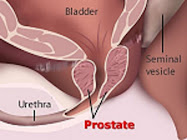
The prostate gland is an organ that is located at the base or exit of the urinary bladder. The gland surroundings the first part of the urethra. The urethra is the way through which urine drains from the bladder to exit from the penis. One function of the prostate gland is to help control urination by pressing straight against the part of the urethra that it surrounds. Another purpose of the prostate gland is to produce some of the substances that are found in normal semen, such as minerals and sugar.
• Over 50% of men in their 60s and as many as 90% in their 70s or older have symptoms of an enlarged prostate (BPH).
• Each year over 230,000 men will be diagnosed with prostate cancer and about 30,000 will die of it.
• Prostatitis is an issue for men of all ages and affects 35% of men aged 50 and older.
Acute prostatitis:
Acute prostatitis is an infection of the prostate caused by bacteria. It usually starts fast and can cause fever, chills, or pain in the lower back and flanked by the legs. It also can cause pain when you urinate. If you have these symptoms, see your doctor right away. Antibiotic drugs more often than not help heal the infection and allay the symptoms.
Chronic prostatitis:
Chronic prostatitis is a prostate disease that keeps coming back time after time. Symptoms may be milder than in acute prostatitis, but they can last longer. Chronic prostatitis can be hard to treat. Antibiotics may work if bacteria are causing the infection. But if bacteria are not the cause, antibiotics won’t work.
What Symptoms Does BPH Cause?
Due to the location of the prostate BPH causes a number of urinary symptoms. The prostate is located just below where the bladder empties into the urethra (which is a thin tube that carries urine from the bladder, through the penis, to outside the body). As the prostate enlarges, it impinges the flow of urine through the urethra.
Natural Treatment for BHP:
• The herb saw palmetto has been used for centuries to treat prostate-related issues. Recent clinical trials have suggested the efficacy of saw palmetto for treating lower urinary tract symptoms (LUTS) due to BPH.
• Healthy fats – Omega-3 fatty acids, found in cold-water fish and flaxseed oil, pay large dividends for prostate health. Avoid excessive saturated fat, however, and stay active: A 2005 large-scale study in the Journal of Urology found that men who were fitter, leaner, and had senior levels of testosterone had lower occurrence of prostate cancer.
• Pumpkin seeds are a rich source of zinc. The prostate needs a ready supply of zinc to purpose properly. The prostate stores up more zinc than any other part of the body. The level of zinc in the prostate gland declines dramatically in men pain from prostate cancer or kind prostate hyperplasia.
• Yoga – Certain Yoga poses can increase blood flow to the groin, thereby relieving certain prostate problems. You can find books on Yoga that include these poses, as well as many others, at any herbal or homeopathic store.
Article courtesy of: http://www.ca-medicalnews.com/nutrition-for-prostate-health.html
Natural Approach To Prostate Cancer Symptoms!
At an advanced age, the risks of surgery for prostate cancer or other more radical treatments may actually be worse than the disease. In Portland Oregon, there is a three-year Oregon Health & Sciences University study; leaders hope to come up with an exercise program to benefit men dealing with prostate cancer who are on testosterone-lowering medications. Prostate cancer is characterized by ‘grade’ and ’stage’; grade is given to indicate how quickly a cancer is growing – the higher the grade, the more likely it is that the cancer will grow and spread rapidly and the size and extent of the tumor will determine its stage.
About one man in six will be diagnosed with prostate cancer during his lifetime, but only one man in 34 will die of the disease. It’s estimated that approximately 234,460 men in the U.S. will be diagnosed with prostate cancer this year, and approximately 27,350 will die of the disease. The main job of the prostate gland is to make seminal fluid, the milky substance that transports sperm.
If cancer is caught at its earliest stages, most men will not experience any symptoms. The need to urinate frequently, especially at night is another symptom. One prostate cancer symptom is difficulty starting urination or holding back urine.
Other symptoms might include unintentional weight loss and lethargy. Weak or interrupted flow of urine and painful or burning urination can be symptoms to watch out for. Some men will experience symptoms that might indicate the presence of prostate cancer.
Your doctor may use either one or two of the most common tests for prostate cancer detection. A prostate gland biopsy usually confirms the diagnosis. There are several potential downsides to PSA testing; for example a high PSA does not always mean a patient has prostate cancer.
A bone scan can indicate whether the cancer has spread or not. There is a newer test called AMACR that is more sensitive than the PSA test for determining the presence of prostate cancer. The decision about whether to pursue a PSA test should be based on a discussion between you and your doctor.
If chemotherapy is decided upon after the first round of chemotherapy, most men receive further doses on an outpatient basis at a clinic or physician’s office. The conventional treatment of prostate cancer is often controversial. Anyone considering surgery should be aware of the benefits, risks and the extent of the procedure.
Urinary incontinence can be one of the possible complications of surgery. In the early stages, surgery and radiation may be used to remove or attempt to kill the cancer cells or shrink the tumor. Radiation therapy is used primarily to treat prostate cancers classified as stages A, B, or C.
An oncologist, a cancer specialist, will usually recommend treating with a single drug or a combination of drugs. Surgery, radiation, hormonal therapy and chemotherapy all have significant side effects; know fully what they are before you proceed. Prostate cancer that has spread (metastasized) may be treated conventionally with drugs to reduce testosterone levels, surgery to remove the testes, chemotherapy or nothing at all.
Treatment options can vary based on the stage of the tumor. Radiation therapy to the prostate gland is either external or internal, both of which use high-energy rays to kill cancer cells and shrink tumors. Since prostate tumors require testosterone to grow, reducing the testosterone level is used to prevent further growth and spread of the cancer.
Consider taking cod liver oil or fish oil supplements every day. A good dietary, natural treatment approach is to avoid all acidic inflammatory foods; those are foods that aren’t alive. Drink freshly made carrot juice every day that you make in a juicer or juice extractor.
Buy lacinato kale and juice it in your juicer with sweet carrots. Drink plenty of pure filtered water, a minimum of a quart a day. Make highly nutritious raw applesauce using a food processor and put in 3-4 cored pesticide-free apples, with the skin on, and mix for a minute; so much better for you than canned highly processed applesauce and add 1/4 tsp. cinnamon or two tablespoons of freshly ground flaxseed for another boost.
Some foods and beverages to avoid that are inflammatory are: caffeine, salt, sugar, meat, dairy products, additives, soft drinks, white flour, white rice, alcoholic beverages, fast food, processed vegetable oils, and refined, packaged and processed food. For snacks, choose raw nuts without salt instead of lifeless roasted nuts. Eat a lot of fruits and veggies every day, not just a token banana or apple.
The outcome of prostate cancer varies greatly; mostly because the disease is found in older men who may have a variety of other complicating diseases or conditions, such as cardiac or respiratory disease, or disabilities that immobilize or greatly decrease their activities. Because prostate cancer is a slow-growing disease, many men with this disease will die from other causes before they die from prostate cancer. Evidence indicates that many patients detect cancer at an earlier stage because of annual screening, so make sure to get a good exam.
Monday, May 3, 2010
Prostate Cancer Test May Aid Treatment Choice!
April 20, 2010 (Washington, D.C.) -- Researchers are developing a new blood test to help identify which men with early prostate cancer can forgo immediate treatment.
In a small preliminary study, the test proved 70% accurate in predicting which men had more aggressive tumors that require treatment.
The results have yet to be replicated, a necessary step before acceptance by the medical community.
But the test shows promise for safely identifying men who can undergo active surveillance -- close monitoring for signs of tumor growth -- rather than treatment, says Robert W. Veltri, PhD, an associate professor of urology and oncology at Johns Hopkins University.
"The goal of the new test, which measures blood levels of three different forms of PSA, is to determine who will and who will not progress and require treatment," Veltri says.
The findings were presented at the annual meeting of the American Association for Cancer Research.
Prostate Cancer: To Treat or Not?
To treat or not to treat is one of the most difficult dilemmas facing men with prostate cancer, especially men with early, localized cancer that is contained within the prostate, when it is curable.
Because prostate cancer often grows so slowly it may never become life-threatening, many of these men, particularly older men, may die of other causes before the prostate cancer causes problems. But in some men, the cancer will spread beyond the prostate without treatment. Then it may no longer be curable.
As a result, there has been a long-running debate in the medical community about the value of treatment to destroy cancer cells vs. active surveillance, also known as watchful waiting.
Watchful waiting consists of close monitoring with periodic digital rectal exams, yearly biopsies, and PSA (prostate-specific antigen) blood tests.
New Prostate Cancer Test Shows Promise
Rising PSA levels can be a sign of prostate cancer spread in men with early cancer. But the PSA test can't distinguish between slow-growing and aggressive cancers, Veltri tells WebMD.
"Because of PSA, there is overdiagnosis and overtreatment of prostate cancer," he says.
The new blood test, known as the Prostate Health Index (PHI), measures three forms of PSA, including pro-PSA. Pro-PSA is a shortened molecule that is missing a few of the amino acids that make up the PSA protein. It's the most accurate form of PSA, Veltri says.
The federally funded study involved 71 men who were diagnosed as having small, low-grade, and low-stage prostate cancer based on their PSA results. At the time of their diagnosis, their blood had been banked.
By an average of nearly four years later, 39 had unfavorable biopsy results that signaled a need for treatment.
The PHI test was performed on blood samples from all 71 men.
"When we combined the [biopsy results] and the serum Prostate Health Index, we were able to predict seven in 10 men that might progress," Veltri says.
Veltri says the PHI test won't replace biopsies but will hopefully allow men to have them every other year instead of year.
His lab is now conducting an expanded study to look for other biomarkers that may predict aggressive cancers.
Test May Predict Prostate Cancer Spread
Also at the meeting, researchers reported using a microchip to detect circulating tumor cells in the blood of people with prostate cancer.
The presence of circulating tumor cells, or CTCs, in the blood is an indication of cancer spread, says Sunitha Nagrath, PhD, an instructor of surgery and bioengineering at Harvard Medical School.
CTCs also carry molecular signatures that can be used to guide targeted drug therapy, she says. The problem: There are only a few CTCs in millions of cells, she tells WebMD. "It’s like looking for a needle in a haystack."
The CTC-chip can capture about 200 circulating tumor cells from a teaspoon of blood, she says.
In a small pilot study, the researchers found CTCs in nearly half of 20 people with early-stage prostate cancer and in two-thirds of people with advanced cancer.
"We think that's an indicator they are more prone to metastasis (cancer spread), but that remains to be proven," Nagrath says.
The test is not commercially available.
"Eventually we hope that when a patient walks in, we can take a simple blood test that tells us if a cancer will spread and also about its molecular signature," she says.
Massimo Cristofanilli, MD, chairman of the department of medical oncology at Fox Chase Cancer Center, is cautiously enthusiastic, saying that a lot more work is needed before either test can be integrated into patient care.
With the CTC chip, he says, one of the issues to be worked out is when to give the test: at the time of diagnosis, surgery, or a few weeks afterward.
There's also the issue of who will pay for new tests, he says. "Insurance will not cover every test for very patient," Cristofanilli tells WebMD.
Article courtesy of WebMD.
Are Prostatitis & Periodontal Disease Linked?
ScienceDaily (Apr. 28, 2010) — Researchers from Case Western Reserve University School of Dental Medicine and University Hospitals Case Medical Center report initial results from a small sample that inflammation from gum disease and prostate problems just might be linked. They discuss their new evidence in the Journal of Periodontology, the official journal of the American Academy of Periodontology.The researchers compared two markers: the prostate-specific antigen (PSA) used to measure inflammation levels in prostate disease, and clinical attachment level (CAL) of the gums and teeth, which can be an indicator for periodontitis.
A PSA elevation of 4.0 ng/ml in the blood can be a sign of inflammation or malignancy. Patients with healthy prostate glands have lower than 4.0ng/ml levels. A CAL number greater than 2.7 mm indicates periodontitis.
Like prostatitis, periodontitis also produces high inflammation levels.
"Subjects with both high CAL levels and moderate to severe prostatitis have higher levels of PSA or inflammation," stated Nabil Bissada, chair of the department of periodontics in the dental school.
Bissada added that this might explain why PSA levels can be high in prostatitis, but sometimes cannot be explained by what is happening in the prostate glands.
"It is something outside the prostate gland that is causing an inflammatory reaction," he said.
Because periodontitis has been linked to heart disease, diabetes and rheumatoid arthritis, the researchers felt a link might exist to prostate disease.
Thirty-five men from a sample of 150 patients qualified for the study, funded by the department of periodontology at the dental school. The participants were selected from patients at the University Hospitals Case Medical Center with mild to severe prostatitis, who had undergone needle biopsies and were found to have inflammation and in some patients, malignancies.
The participants were divided into two groups: those with high PSA levels for moderate or severe prostatitis or a malignancy and those with PSA levels below 4 ng/ml. All had not had dental work done for at least three months and were given an examination to measure the gum health.
Looking at the results, the researchers from the dental school and the department of urology and the Institute of Pathology at the hospital found those with the most severe form of the prostatitis also showed signs for periodontitis.
Other authors on the paper, "Association between Periodontal Disease and Prostate-Specific Antigen Levels in Chronic Prostatitis Patients," were: Nishant Joshi, Sena Narendran, Rick Jurevic and Robert Skillicorn from the CWRU dental school; and Donald Bodner and Gregory T. MacLennon from the University Hospitals Case Medical Center.
Wednesday, February 3, 2010
Prostate Health Guide!
The Keys to Promoting Good Prostrate Health–Diet and Exercise, Supplements, and Alternative Therapies. Given the amount of attention that is being placed on prostate health in recent years, the question that many men are asking themselves has become “how to promote good prostate health.”
Prostate cancer is the most common malignancy in males, and is responsible for an increasing number of deaths every year as Americans are living well into their late seventies and eighties.
The most important thing that you can do to ensure that you have a healthy prostate is to eat a diet that is high in fruits and vegetables, and get plenty of exercise. The body can produce its own anti cancer agents if it has the raw materials, almost all of which are found in fruit and vegetable matter. Exercise is also very important in the promotion of prostate health, since a body that receives enough exercise has lower fat levels, fewer toxins, and a healthier immune system than one that does not receive enough exercise.
Another important component of prostate health is taking supplements that promote good prostate health. A traditional folk remedy for prostate problems is to eat pumpkin seeds. Modern scientific studies have revealed that the element Zinc is vital to maintaining prostate function. Though it is approximately the size of a walnut, the prostate is the body’s leading consumer of Zinc. It turns out that pumpkin seeds have a very high Zinc content. It is amazing how often folk remedies stand up in the face of scientific inquiry.
The prostate is a gland that is almost never thought about until it causes trouble. Prostate problems are relatively rare in younger men, but become increasingly common as men age beyond the age of fifty. It is therefore very important to take care of the prostate since life spans are increasing and prostate problems that never developed since the individual died before their onset are becoming more and more prevalent. Look to good prostrate health.
Article courtesy of prostatehealthnews.org
Subscribe to:
Posts (Atom)





 Posts
Posts


